


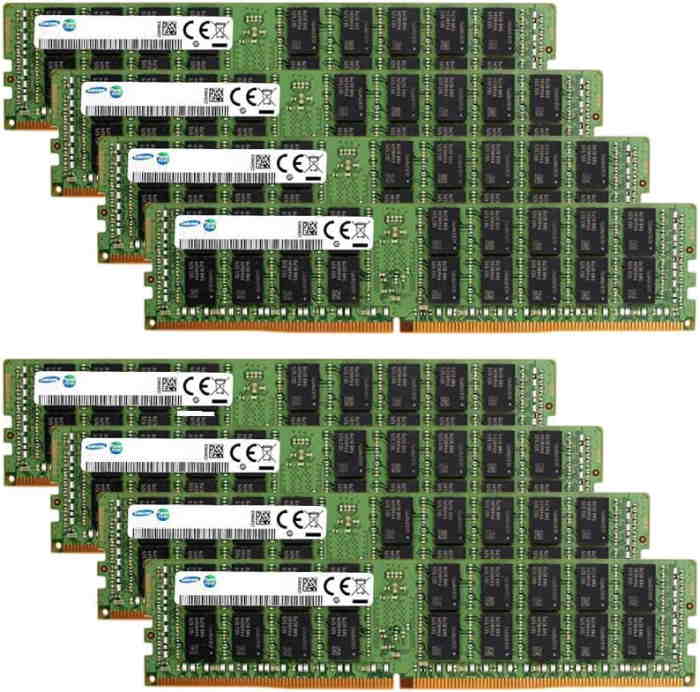
Samsung Memory ECC-Registered 256GB
Unlock the full potential of your server or workstation with the Samsung Memory ECC-Registered 256GB kit. This high-capacity DDR4 memory solution is engineered for professionals who demand uncompromising reliability and performance. With a total capacity of 256GB (8 x 32GB) and a speed of 2666MHz, this kit is ideal for virtualization, database management, and intensive content creation.
Why Choose Samsung ECC-Registered Memory?
Samsung is a global leader in memory technology, and this ECC-Registered (RDIMM) module reflects that expertise. Error-Correcting Code (ECC) memory detects and corrects data corruption, preventing system crashes and data loss—critical for 24/7 operations. Registered (buffered) memory reduces electrical load on the memory controller, allowing for higher capacities and stability in multi-module configurations.
Key Features
- Massive 256GB Capacity: Eight 32GB modules provide ample memory for memory-intensive applications and virtual machines.
- ECC Registered (RDIMM): Ensures data integrity and system stability, reducing downtime and errors.
- 2666MHz Speed: Delivers fast data transfer rates for smooth multitasking and responsive performance.
- DDR4 Technology: Lower power consumption (1.2V) and higher bandwidth compared to DDR3.
- Server-Grade Reliability: Built to meet rigorous quality standards for enterprise environments.
Performance and Use Cases
This memory kit is perfect for servers running VMware, Hyper-V, or Kubernetes, as well as for database servers (SQL, Oracle) that require large memory pools. It also excels in high-performance computing (HPC), 3D rendering, and video editing workstations where every gigabyte counts. The 2666MHz speed ensures efficient data throughput, while ECC protection safeguards your critical workloads.
Compatibility and Installation
Designed for servers and workstations that support DDR4 RDIMM modules, this memory is compatible with Intel Xeon and AMD EPYC platforms. Always verify your motherboard or server manual for supported memory configurations. The modules are easy to install—just align the notch and press down firmly until the clips lock.
Upgrade your infrastructure with the Samsung Memory ECC-Registered 256GB kit and experience the peace of mind that comes with enterprise-grade memory.
Key Specifications
Detailed Parameters
- RAM Type:
- DDR4
- Stick Size in GB:
- 32
- Stick Count:
- 8
- Speed in MHz:
- 2666
- ECC:
- Yes
Pros
- Massive 256GB capacity for demanding applications
- ECC Registered memory prevents data corruption
- Reliable Samsung brand with high-quality components
- 2666MHz speed balances performance and efficiency
- Ideal for servers and workstations
Cons
- Requires compatible server/workstation motherboard
- Higher cost compared to non-ECC memory
- Not compatible with standard desktop PCs