


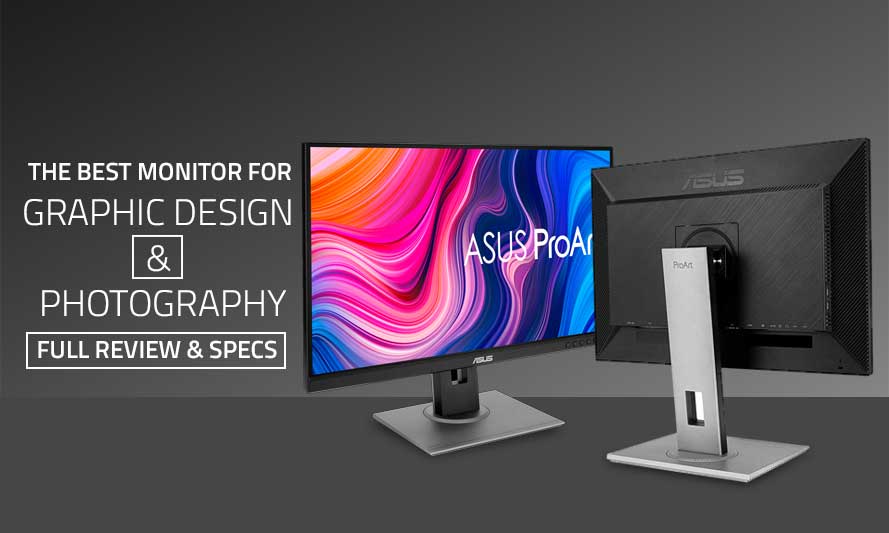
Asus built its ProArt line for people who cannot afford to guess at color, and the 27-inch model sits at the sweet spot of that range. It costs less than the company’s 4K and OLED ProArt panels but keeps the calibration pedigree that photographers, illustrators, and video editors actually need. After spending time with the specs and the feature set, our take is straightforward: if your work depends on what a color looks like rather than how fast a frame renders, this monitor earns its place on the desk.
This page contains affiliate links. We may earn a little commission from qualifying purchases made through these links, at not extra cost to you. This is to support our work.
ASUS ProArt 27 Inch QHD Professional Monitor
RELATED ARTICLE

Best Wi-Fi Routers for Streaming & Gaming
We review the best of the best routers you can grab for gaming and streaming…
Design and Build
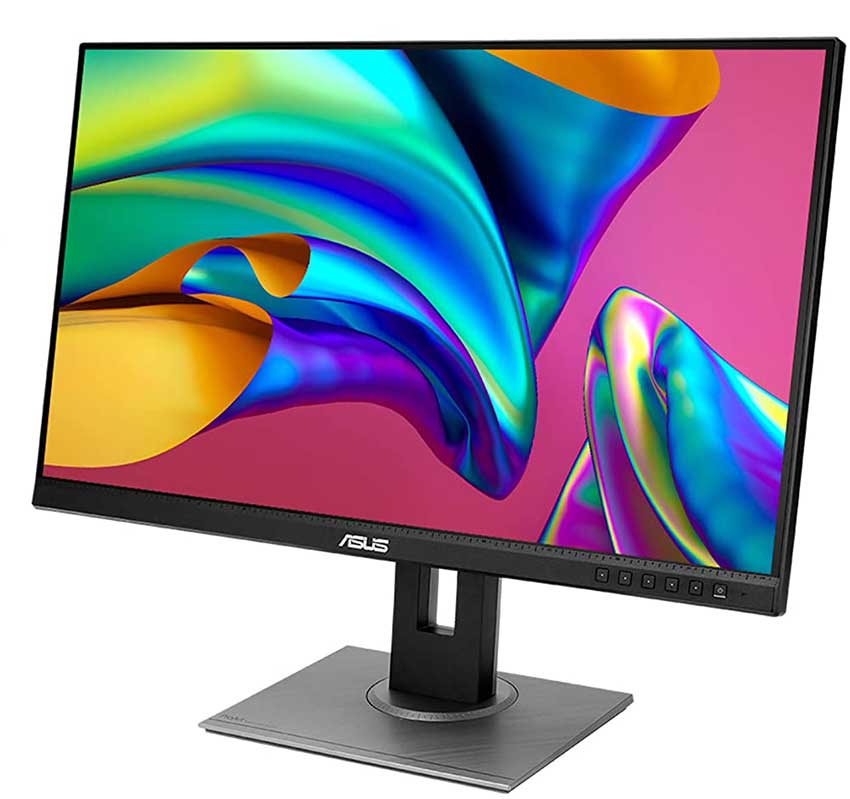
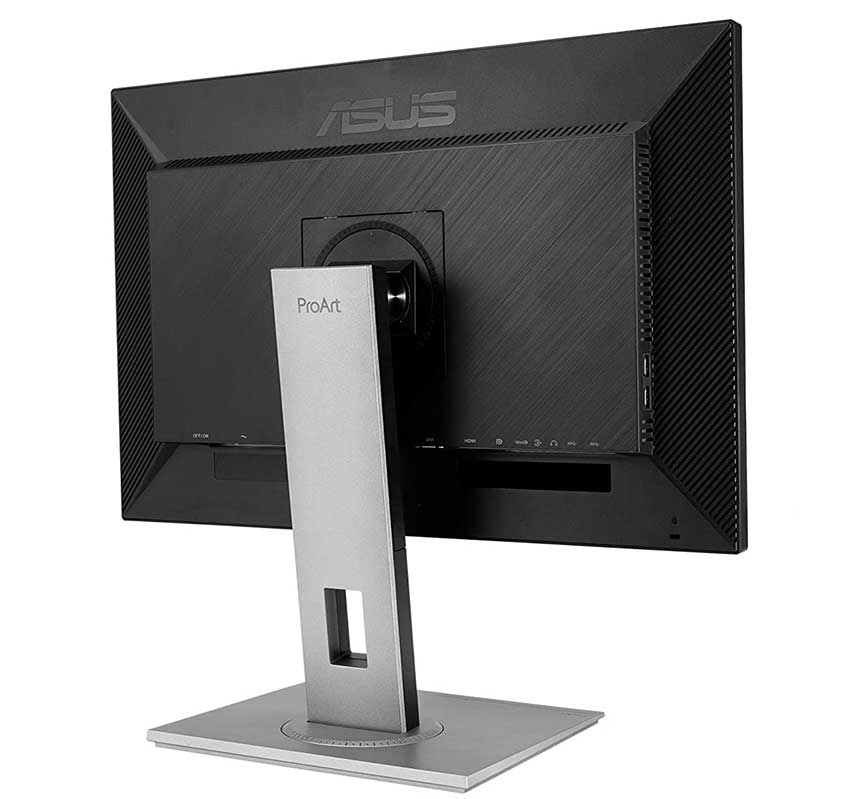
The panel favors function over flash. A slim, nearly borderless bezel on three sides makes it easy to line up two or three units side by side without a thick black gutter breaking up the workspace, and the stand carries the weight without wobble. Asus ships VESA mounting points on the back for anyone who prefers an arm, and the whole unit tips the scale at a substantial 7.56 kg, a sign of a sturdier chassis than the price might suggest.
Panel and Color Accuracy
The core of this monitor is a 27-inch WQHD IPS panel running at 2560×1440, factory calibrated and Calman Verified before it leaves the plant. Asus rates the average color deviation at Delta E below 2, which in practice means colors on screen track closely enough to a reference standard that most eyes will not catch the difference. Coverage lands at 100 percent sRGB and 100 percent Rec. 709, adequate for web, print-adjacent, and broadcast-standard work, though anyone shooting for wide-gamut Adobe RGB or DCI-P3 output will need to look further up the ProArt catalog.
Six-axis color adjustment through the ProArt Palette software lets a user fine-tune hue, gamma, and temperature per channel rather than relying on a single global slider, and six preset modes cover common tasks like darkroom review and rapid rendering. Peak brightness caps out at 350 nits and the contrast ratio sits at a fairly ordinary 1000:1, numbers that will not impress on a spec sheet next to gaming panels but rarely matter for print and screen color work, where consistency counts more than raw punch.
Ergonomics and Connectivity
Height, tilt, swivel, and pivot adjustments are all present, and a built-in sensor rotates the on-screen image automatically when the panel is turned to portrait orientation, useful for anyone laying out long-form documents or portrait photography. Port selection covers DisplayPort, Mini DisplayPort, HDMI, dual-link DVI, and a four-port USB 3.2 hub, enough for daisy-chaining a second monitor off a single DisplayPort cable. The one dated inclusion is DVI, a connector most modern GPUs have dropped; VGA is absent entirely, which will not bother anyone running current hardware.
Response time lands at 5ms GTG and the panel tops out around 60Hz, numbers that flag this as a productivity display rather than a gaming one. Buyers who split time between design work and gaming on the same screen should weigh that tradeoff before buying.
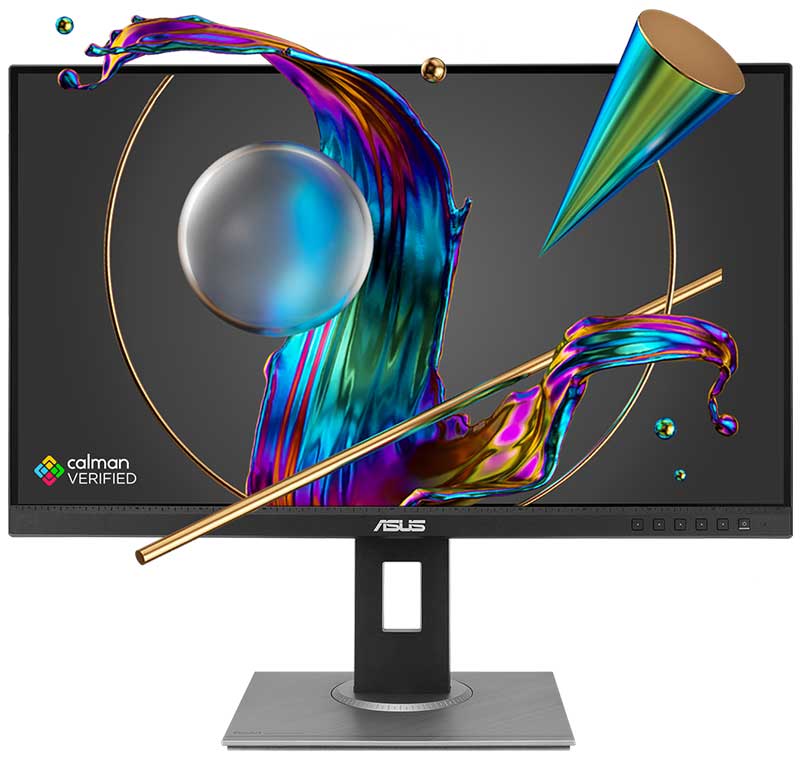
Specifications
Panel: 27-inch IPS, WQHD 2560×1440
Brightness: 350 cd/m2
Contrast: 1000:1 typical
Color coverage: 100% sRGB, 100% Rec. 709
Color accuracy: Delta E < 2, factory calibrated
Response time: 5ms GTG
Ports: DisplayPort 1.2, Mini DisplayPort, HDMI 1.4, dual-link DVI, USB 3.2 Gen 1 x4
Ergonomics: tilt, swivel, pivot, height adjust, VESA 100x100mm
Weight: 7.56 kg
RELATED ARTICLE

Best 24″ Monitors for Various Purposes
Take your pick of the best 24-inch Monitors for gaming, productivity, and every other thing you can think of…
Related Content >
What’s the best PC Build for Graphic Design in 2026?
Best Computer Build for Graphic Design 2026 (Updated)
Best PC Build for Content Creators in 2026 Intel vs AMD
The Best Desktop PC Build for Creators and Designers 2026
What are the Best Graphics Drawing Tablets for Artists in 2026?
Concluding Thoughts
Judged against what it sets out to do, the PA278CV succeeds. Asus did not chase peak brightness or a high refresh rate here; it chased color fidelity, and that focus shows in the Delta E figures and the factory calibration report that ships in the box. For a designer, photo editor, or video colorist working primarily in sRGB and Rec. 709, that trade is the right one.
The compromises are predictable rather than concerning. A 60Hz panel and modest 1000:1 contrast will disappoint anyone hoping to use this as a dual-purpose gaming display, and the wider Adobe RGB and DCI-P3 crowd will need to step up to a pricier ProArt model. Within its intended lane, though, the PA278CV has few real rivals at this price. It is not the most exciting monitor on the market, but excitement was never the assignment; accuracy was, and it delivers. As a computer monitor for a graphic design PC build, this is a good choice as it is just the right size and the cost is not prohibitive.